About Brian Williams

Author of Brian's Coffee Spot, you can read all about me in the "About Me" section of the blog (www.brian-coffee-spot)

Coffee, Part V: Taste

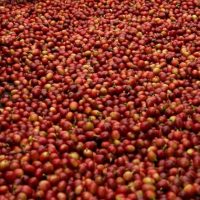
Freshly picked coffee cherries, spread out and ready for sorting prior to processing.Welcome to this, the fifth and (for now) final instalment of my Coffee at Home sub-series looking at coffee. I started the series with the concept of direct trade, explaining why knowing where your coffee comes from is important. I followed that by considering blends, the art of combining different coffees in order to create a specific taste profile. In the third instalment, I introduced the idea that pretty much everything has an impact on how your coffee tastes, all the way from the farm to the roaster, before looking at what are, for me, the two biggest factors: processing and roasting. Which brings us neatly to this fifth instalment, how preparing and serving your coffee affects how it tastes.

At a very basic level, how you prepare your coffee obviously effects its taste. An espresso tastes very different from a pour-over, even using the same bean. However, the effects can be more subtle than that, which is what I want to explore in this post. It also goes beyond the basics such as preparation method. Almost everything changes how you perceive flavour, from the temperature of the coffee right down to the shape of the cup.
Continue reading

Brian’s Travel Spot: Danang, Hội An and Huế

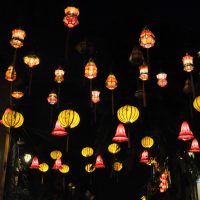
Multi-coloured lanterns hanging in a street in the Old Town in Hoi An and lit up at night.Welcome to the third instalment of my Vietnamese Travel Spot, which covers the trip I made to Vietnam exactly three years ago. I wrote some of it up at the time, but never completed writing about my train journey from Ho Chi Minh City to Hanoi, a 36-hour epic which I did in three stages, Ho Chi Minh City to Danang, Danang to Huế and Huế to Hanoi.

I’ve already written about the first stage, Ho Chi Minh City to Danang, 18½ hours on a no-frills sleeper which left Ho Chi Minh City in mid-afternoon and arrived in Danang the following morning. Meanwhile, the final leg, from Huế to Hanoi, involved another sleeper, and is covered in the final instalment of this series, just leaving with middle section, which is the subject of this post.

I broke my journey like this so that I could visit two contrasting cities, Hội An and Huế. I began with Hội An, a short way south of Danang (and which is bypassed by the train), then took the train from Danang to Huế, without a doubt the most scenic stretch of the whole route, before carrying on to Hanoi after a day in Huế.

Continue reading

Making Coffee at Home: Water

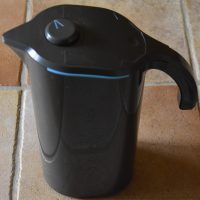
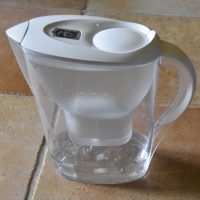
My humble Brita Water filter which I use for my coffee making.My Making Coffee at Home series is designed to help you make better coffee at home. I’ve written about various coffee brewing methods, discussed the importance of equipment such as grinders and scales, and even talked about the coffee itself. However, there’s one important topic that I haven’t mentioned until now, and that’s water.

Given that a cup of coffee contains around 98% water, it seems obvious that it’s important, but it’s often overlooked. Although water quality is pretty good in the developed world (that is, it’s drinkable and won’t make you ill), its chemical composition varies widely. Water contains all sorts of dissolved minerals which affect both its taste and its ability to extract the flavours in coffee.

You might think that distilled water (that is, pure H2O, with no dissolved materials) would be the answer, but it’s not. Distilled water is actually rather poor at extracting coffee: it turns out that minerals such as calcium and magnesium (both common in water), are rather useful in enhancing extraction, while carbonates also play a role. So in today’s Making Coffee at Home, I’m going to look at what makes good water for coffee, and, more importantly, how to get it.

Continue reading

Peak Water

My new Peak Water filter jug, fresh out of the box.Peak Water, for those who don’t know, is a home water filter designed specifically for coffee. I’ve written a wider article about water and why it’s important for coffee as part of my Making Coffee at Home series, but for now I’ll just note that I’ve been filtering my water at home (using a regular water filter jug) for many years (long before I started the Coffee Spot) and really notice the difference when I don’t.

What makes Peak Water special is that it has been designed to produce water that’s optimised for brewing coffee. The team behind Peak Water has some form on this subject, with leading members Maxwell Colonna-Dashwood and Christopher Hendon having written the well-regarded book, Water for Coffee, which was published in 2015. So, when Peak Water was launched on Kickstarter in April 2018, I was one of its first backers.

Now, just over two years later, my Peak Water filter has arrived! Excitedly, I unpacked it, put it together and started using it. But what exactly is it? What makes it different from a normal water filter and what’s it like to use? And perhaps most importantly of all, does it make my coffee taste better?

Continue reading

Intelligentsia, Wicker Park

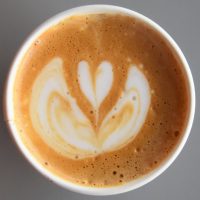
The latte art in my decaf cappuccino, served at Intelligentsia, Wicker Park in Chicago.Just before the full onset of the COVID-19 pandemic, I spent a day exploring Wicker Park, one of many Chicago neighbourhood clustered along Milwaukee Avenue. I visited three coffee shops along the way, Fairgrounds Craft Coffee and Tea, Purple Llama (now sadly permanently closed) and the subject of today’s Coffee Spot, Intelligentsia. It’s appropriate that, in the week that I wrote about Canopy Coffee, the first coffee shop I visited since the easing of COVID-19 restrictions in the UK, that I should also feature the last coffee shop I visited before COVID-19 forced many coffee shops to close.

As regular readers know, I have a soft spot for Intelligentsia, one of Chicago’s pioneering roaster/coffee shop chains. I first visited its coffee bar in the Monadnock Building on Jackson Boulevard in 2003, long before my Coffee Spot days. The Wicker Park location is a more recent addition, occupying an open, light-filled space on the ground floor of an apartment block on the corner of Division and Ashland. There’s the usual Intelligentsia offering of coffee, Kilogram tea, cakes/savouries and a large retail selection. There are three espresso options: Black Cat, single-origin and decaf, while pour-over and batch-brew each have their own single-origin.

Continue reading

Opening During COVID-19: Canopy Coffee

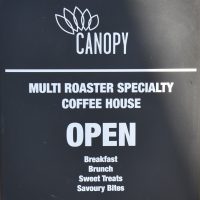
A sight for sore eyes: the A-board proclaiming that Canopy Coffee is now open after almost three months of enforced closure during the COVID-19 pandemic.My local speciality coffee shop, Canopy Coffee, reopened two weeks ago. As part of the process, it converted itself from a small, sit-in shop to a takeaway-only operation, serving from a hatch to the right of the main entrance. You can see what I made of the new-look Canopy when I visited for my Coffee Spot Update, which is normally where I’d leave things.

However, given the current situation, with many coffee shops unable to safely open during the COVID-19 pandemic, I thought it would be useful to share what I learnt from the conversation that I had with Jonathon, Canopy’s owner, about the steps he took to reopen Canopy and the thought processes he went through.

There are lots of factors to consider when opening during the COVID-19 pandemic. Is it safe, both for staff and customers? Will it be economical? Can you stay true to your ethics and values? What compromises will you have to take in order to open? As you will see, Jonathon had to wrestle with all these issues, but if there’s one piece of advice he asked me to convey above all others, it’s not to open until you’re absolutely ready to.

Continue reading

Canopy Coffee (COVID-19 Update)

A sight for sore eyes: the A-board proclaiming that Canopy Coffee is now open after almost three months of enforced closure during the COVID-19 pandemic.On March 15th, I was in Chicago, visiting Fairgrounds, Purple Llama and Intelligentsia in Wicker Park. The following day, I flew home. Little did I know that they would be the last coffee shops I’d visit with my Coffee Spot hat on for more than three months. On my return to the UK, I did my best to support my three local speciality coffee shops, but within a week, last of them, Surrey Hills Coffee, had joined the other two in temporarily closing due to the COVID-19 pandemic.

March turned into April and April turned into May and, while I wasn’t short of good coffee at home, I missed my local coffee shops, missed my flat whites (while I make good home pour-over and espresso, I’m still rubbish at milk) and missed my friends who worked there. Then, on Saturday, 16th May, exactly two months after leaving Chicago, I was in Guildford, shopping, and what did I see? Canopy Coffee. And it was open! Naturally, I forgot everything else and made a beeline for it!

Continue reading

Coffee, Part IV: Processing & Roasting

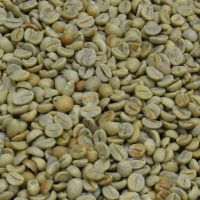
Green Beans from a washed coffee at Chimney Fire Coffee in Guildford prior to roasting.Welcome to the fourth instalment of my Coffee at Home sub-series looking at the coffee itself. In Part I, I looked at the concepts of direct trade and explained why knowing where your coffee comes from is important. Part II, meanwhile, was all about blends, the art of combining different coffees in order to create a specific taste profile, which neatly leads us Parts III and IV, which are all about why coffee tastes the way it does.

In previous instalment (Part III), I introduced the idea that pretty much everything has an impact on how your coffee tastes, all the way from the farm to the roaster. I also nailed a common misconception that coffee from a certain country/region tastes in a particular way. Finally, I provided some (hopefully) useful advice on tasting notes and how to read the information on coffee packaging.

In this, Part IV, I’m looking at what, for me at least, are the two biggest factors determining a coffee’s flavours. The first, which takes place at origin, is processing, while the other is the final step before the coffee gets to you/the coffee shop, namely roasting. Hopefully, I’ll be able to unpack some of the mystery!

Continue reading

Coffee, Part III: Tasting Notes

Welcome to the third instalment of my Coffee at Home sub-series where I look at the coffee itself. In Part I, I looked at the concepts of direct trade and why knowing where your coffee comes from is important. Meanwhile, Part II was all about blends, the art of combining different coffees in order to create a specific taste profile, which neatly leads us onto this, Part III, which is all about why coffee tastes the way it does.

So, what affects the way a coffee tastes? Well, it turns out pretty much everything. The specific bean, where it’s grown, the altitude, the amount of sunshine, how its picked, how its processed, how its roasted… And that’s all before it gets to you, since how you make your coffee throws another variable into the mix.

It’s a subject that you could write books about, so I’m not going to be able to cover everything in one blog post. In fact, I’m going to write several, starting with a quick guide on tasting notes and how to read the information on coffee packaging. I’ll also nail a common misconception while I’m at it.

Continue reading

The Miners Coffee and Characters, Slavíkova

The sign from outside The Miners Coffee & Characters in Prague.Today’s Coffee Spot takes us back to last summer and Prague, when I visited The Miners Coffee and Characters (to give it its full name) in Vinohrady. The first of a planned series of coffee shops, it was very new when I visited in June last year, having only been open for three months. In contrast to everywhere else I’d visited that weekend, Miners had an ultra-modern, Scandinavian feel to it, with clean, open lines, pale woods and white walls.

It also had the latest equipment, its brand-new Mark II Slayer espresso machine matched with a pair of Victoria Arduino Mythos 1 grinders. For all the high-tech espresso equipment, pour-over is still done by hand (albeit with an uber boiler, backed up with a couple of temperature-controlled kettles). The coffee is from the UK’s Colonna Coffee, although Miners has plans to roast its own, to be used in conjunction with Colonna. There are three options on espresso, including decaf, and three more on pour-over through the V60. If you’re hungry, there’s a selection of cakes, a choice of three toasted sandwiches (one vegan) and three standard weekend brunch options (two vegetarian: French toast and scrambled eggs; and one vegan: avocado toast).

Continue reading