About Brian Williams

Author of Brian's Coffee Spot, you can read all about me in the "About Me" section of the blog (www.brian-coffee-spot)

Making Coffee at Home: Moka Pot

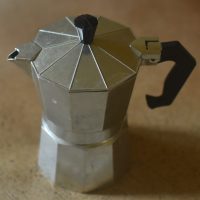
My moka pot, a fairly cheap one that I've had for many a year.Up until now, Making Coffee at Home has focusedon brew methods which I regularly use: cafetiere, Clever Dripper, AeroPress, pour-over and espresso. Today’s post is different since I’m writing about the moka pot, something which I own, but stopped using many years ago, unhappy with the results. I moved onto other brewing methods and my moka pot has sat at the back of a shelf ever since.

My interest was initially rekindled by tweets from Phil Wain (editor of Caffeine Magazine) which got me thinking that maybe I should write about the moka pot after all. I began the Making Coffee at Home series with a desire to help people make good coffee at home, particularly people who are new to making good coffee. Although I’ve tried to take you on a journey through the various preparation methods I regularly use, I know that not everyone will have the time to invest in learning a new method. Similarly, many of you won’t want to buy new coffee equipment. However, I suspect that, like me, plenty of you have a moka pot somewhere in your kitchen. So, I got my moka pot down, dusted it off and here we are…
Continue reading

Brian’s Travel Spot: Amtrak’s Full Dining Service

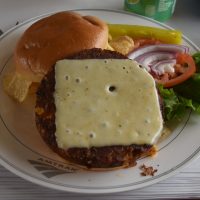
The black bean and corn veggie burger, from Amtrak's lunch menu, served on the California Zephyr, April 2019, en-route to Chicago.Two months ago, Amanda and I caught Amtrak’s Crescent service from New York to Atlanta. As fans of Amtrak’s dining cars, we were keen to see what the new “upgraded” dining service was like. Suffice to say we were disappointed, prompting me to write about the demise of Amtrak’s full dining service.

The good news is that this only applies to services east of the Mississippi, including the City of New Orleans, which runs between Chicago and New Orleans. Further west, Amtrak still offers its full dining service, a major plus when travelling by train. Having recently written about my journey last year from Los Angeles to San Jose on the Coast Starlight, and the trip Amanda and I took on the California Zephyr from Emeryville to Chicago a few weeks later, I’ve been inspired to write this as a counterpoint to the demise of Amtrak’s Full Dining Service.

For now, at least, the dining car, with its full dining service, is alive and well west of the Mississippi. Although the COVID-19 pandemic has robbed us all of the joys of communal dining for now, I look forward to when I’ll be eating in the Superliner dining car again.

Continue reading

Brian’s Travel Spot: California Zephyr to Chicago – Day 3

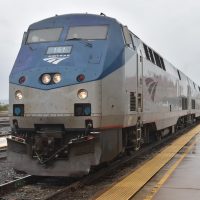
Amtrak Locomotive No. 161 at the head of the California Zephyr, eastbound for Chicago, standing at the platform at Grand Junction, Colorado, with Locomotive No. 19 behind it.Welcome to the third and final part of my bonus Travel Spot, telling the story of the journey that Amanda and I took from California to Chicago this time last year. We travelled on the California Zephyr, a daily service between Emeryville (just across the bay from San Francisco) and Chicago, with a scheduled journey-time of 51½ hours. Along the way, it crosses roughly two-thirds of North America, over two mountain ranges and through an array of amazing, contrasting landscapes.

Our first day on the train was covered in Part 1 of this Travel Spot, when we travelled across California’s Central Valley, over the Sierra Nevada Mountains via the Donner Pass and down into and across Nevada following the Truckee and Humboldt Rivers. The following day, covered in Part 2, saw us going to bed in Nevada and waking up almost all the way across Utah. We then followed the Colorado River through Ruby Canyon before climbing into the heart of the Rockies, through the Moffat Tunnel and down to the other side to Denver.

In this final instalment, you can follow our progress through Nebraska, Iowa and Illinois, crossing the Missouri and Mississippi Rivers on our way to Chicago.

Continue reading

Making Coffee at Home: Espresso

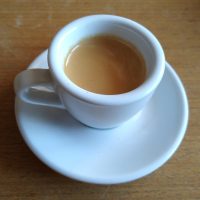
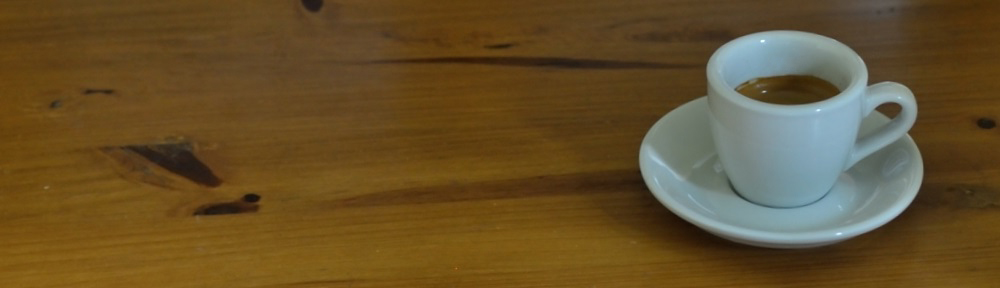
An espresso, in the Coffee Spot cup, pulled on my Sage Barista Express using the San Lorenzo espresso from Curve Coffee RoastersWelcome to another instalment of my Making Coffee at Home series, where I’ve left the best (hardest?) until last. After simple guides for the cafetiere,  Clever Dripper, AeroPress and (not so simple) pour-over, I’ve finally turned my attention to espresso. Just to be clear, whereas for all my other guides (including pour-over to some extent), you can get decent results with minimal outlay, this is not true for espresso. If you want good espresso, you’re going to need to spend a lot of money on both a good espresso machine and a high-quality grinder (I’d say a minimum of £500).

Now that’s not to say that you can’t made short, strong black coffee at home. You can. The AeroPressVietnamese cup-top filter,  ibrik/cezve, moka pot and capsule machines can all make good short, strong black coffee. It’s just not going to be espresso. That said, if you’re hankering after something approaching your favourite flat white/cappuccino/latte, then you can do a reasonable job with a variety of common coffee-making equipment (see, for example, this excellent video from James Hoffman). However, what this post is all about is espresso of the sort you’d get in a good speciality coffee shop.

Continue reading

Meet the Roaster: Surrey Hills Coffee

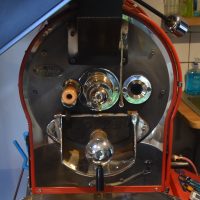
The 10 kg Toper roaster in the Roastery Shack, Surrey Hills Coffee's bespoke roastery.I first came across Surrey Hills Coffee in early 2016 at what was then Turn Fit Deli on Chapel Street in my hometown, Guildford. Although starting out as a deli, it quickly morphed into a coffee shop, supplied by Surrey Hills, which had started roasting in 2014, although Chris and Monika, the Swedish couple behind Surrey Hills, have a much longer involvement with coffee than that. In April 2016, Turn Fit decided to concentrate on its fitness business, and while Chris and Monika hadn’t planned on becoming coffee shop owners, they saw the opportunity and took over the lease to run the coffee shop themselves.

One thing led to another and by 2018, the original shop had moved to much bigger premises in Jeffries Passage. That same year, Surrey Hills opened its second coffee shop, The Pod at London Square, as well as growing a thriving, local wholesale business, supplying other cafes and retailers. Although the current COVID-19 pandemic has put the coffee shops on hold, this has, ironically, given Chris and Monika a chance to catch their breath and re-focus on the heart of their business, the roastery, which I learnt more about when we caught up last weekend.

Continue reading

Brian’s Travel Spot: California Zephyr to Chicago – Day 2

Amtrak Locomotive No. 161 at the head of the California Zephyr, eastbound for Chicago, standing at the platform at Grand Junction, Colorado, with Locomotive No. 19 behind it.Welcome to the second instalment of my bonus Travel Spot. Just over a year ago, Amanda and I left Emeryville Station onboard Amtrak Train No. 6, the California Zephyr. A daily service between Emeryville (just across the bay from San Francisco) and Chicago, the California Zephyr has a scheduled journey-time of 51½ hours as it makes its way west-to-east across roughly two-thirds of North America. The first part of this Travel Spot covered our first day on the train, travelling across California’s Central Valley, over the Sierra Nevada Mountains via the Donner Pass and down into and across Nevada following the Truckee and Humboldt Rivers.

In this instalment, we pick up our journey with our first of two nights on the train, which saw us going to bed in Nevada and waking up almost all the way across Utah. We followed the Colorado River for most of the day, crossing into Colorado along to 40 km long Ruby Canyon before climbing up through the Rockies, descending again into Denver as night fell. You can read about the third day of our journey, from Denver to Chicago, in the third and final instalment of this Travel Spot.

Continue reading

Making Coffee at Home: Pour-over

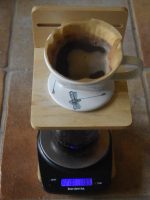
My handmade ceramic filter from Vietnam midway through the top-up pour on my Osaka stand.Welcome to another instalment of my Making Coffee at Home series. After a brief diversion to look at coffee itself, I’ve returned to coffee-making techniques. So far, I’ve written simple guides for the cafetiere, Clever Dripper and AeroPress. In contrast, today’s Making Coffee at Home isn’t focused on a single method. Instead, I’m looking at the broad category of pour-over filters, any device where you pour water over coffee grounds and it filters through the bottom.

There are many filter devices out there, made from various materials (plastic, glass, ceramic and metal) with a wide variety of designs. Pour-over is also one of the oldest coffee-making methods: the Melitta Filter, for example, was patented in 1908, making it older than the cafetiere (1929). These days, probably the most commonly recognised are the Chemex (invented in 1941) and the much more recent Hario V60 (2004).

One of the reasons I’ve left pour-over until now is that, after espresso, it’s the method I’ve struggled with the most, giving up on it for long periods. Although you can get away with making pour-over using just a kettle, filter and filter papers, this is one method where having the extra kit really pays off.

Continue reading

Coffee, Part II: Blends

Welcome to another instalment of my Coffee at Home series, where once again, I’m looking at coffee. The Coffee at Home series aims to provide simple, practical advice on making coffee at home, although I deviated from this in Part I of my look at coffee, where I talked about the concepts of direct trade and single-origin coffee. However, this was to set the scene for what I want to talk about today, which is some advice on what to look for when buying coffee.

When I started the Coffee Spot, back in 2012, my knowledge of coffee was very limited. To me, coffee was just coffee. However, I quickly realised that it was way more complicated than that, something which can be rather daunting when you’re dipping your toe into the world of speciality coffee for the first time and trying to order some coffee on-line from a speciality roaster. To help you out, I’ll be unpacking some of the terms that I now take for granted, but which back then I found rather baffling. Having introduced you to the concept of single-origins, I now want to talk about blends, which is how the majority of coffee is sold.

Continue reading

Brian’s Travel Spot: California Zephyr to Chicago – Day 1

Amtrak Locomotive No. 161 at the head of the California Zephyr, eastbound for Chicago, standing at the platform at Grand Junction, Colorado, with Locomotive No. 19 behind it.Welcome to today’s bonus Travel Spot. Exactly a year ago today, Amanda and I left Sunnyvale in the Bay Area, California, to catch Amtrak Train No. 6, the California Zephyr, at Emeryville Station. Roughly 60 hours and 4,000 km later, we reached our destination, Buffalo Grove, in the Chicago suburbs. This was part of a much larger, five-week trip that began in New Orleans, then saw me fly to Los Angeles so that I could take the Coast Starlight along the Pacific Coast to San Jose. From Chicago, I (eventually) flew home. One day I hope to write up the entire trip, but for now, I hope you enjoy the train ride!

The California Zephyr is a daily service between Emeryville (just across the bay from San Francisco) and Chicago, a scheduled journey of 51½ hours that crosses the Sierra Nevada and Rocky Mountains as well as both the Missouri and Mississippi Rivers as it makes its way west-to-east across roughly two-thirds of North America. It’s the longest I’ve been on a train, beating the 47 hours I spent on the Empire Builder from Chicago to Portland (Oregon) in 2015.

Continue reading

Coffee, Part I: Origins

Ripe coffee cherries on a tree, waiting to be picked.Welcome to another instalment of my Coffee at Home series. I began by focusing on brewing methods, with simple guides to the cafetiere, Clever Dripper and AeroPress. I’ve also written about equipment, such as grinders and scales. However, there’s something else I want to talk about. No matter how good your equipment is, how much you perfect your technique, there’s one thing it can’t fix, and that’s the quality of the coffee.

It’s easy to assume that everyone knows about coffee, but there was a point, before I started the Coffee Spot, when I knew very little. I clearly remember the sense of bewilderment when I first walked into a speciality coffee shop (Edinburgh’s Brew Lab), looked at the menu and realised that I had no idea what it was trying to tell me.

I’ll also say, from the outset, that if you are happy with the coffee you are currently buying/making, then that’s fine. Don’t let me, or anyone else, tell you otherwise. However, if you are dipping your toe into the world of speciality coffee for the first time and are wondering what tasting notes, varietals and processing are all about, then this is the post for you.

Continue reading